


For many couples, the road to conception is more complicated than expected. While female fertility often gets the spotlight, male factors contribute to roughly half of all infertility cases worldwide. The encouraging news is that male fertility is highly responsive to lifestyle, nutrition, and targeted supplementation. This article explores the most effective, evidence-based natural strategies for optimizing male reproductive health.
Understanding Male Fertility
Male fertility depends on several interconnected factors: sperm count (the number of sperm per milliliter of semen), sperm motility (how well sperm swim), sperm morphology (the shape and structure of sperm), and overall semen volume. A disruption in any of these can significantly reduce the chances of conception. The World Health Organization (WHO) considers a sperm count of at least 16 million per milliliter to be within the normal range, with progressive motility above 42% and normal morphology above 4% (WHO, 2021).
The good news is that sperm regenerate approximately every 64 to 74 days, meaning that positive changes in lifestyle can produce measurable improvements within just a few months.
Nutrition and Diet
Diet is one of the most powerful levers for improving sperm quality. A diet rich in antioxidants — found in fruits, vegetables, nuts, and whole grains — helps combat oxidative stress, which is one of the leading causes of sperm DNA damage.
Key nutrients backed by research include:
Zinc: Found in oysters, red meat, pumpkin seeds, and legumes, zinc plays a central role in testosterone production and sperm development. A deficiency has been directly linked to reduced sperm count and motility (Fallah et al., 2018).
Folate: Men with higher folate intake have been shown to have lower rates of sperm aneuploidy (abnormal chromosome numbers). Dark leafy greens, beans, and fortified cereals are excellent sources (Young et al., 2008).
Omega-3 Fatty Acids: Docosahexaenoic acid (DHA), an omega-3 found in fatty fish, is a structural component of sperm cell membranes. Studies show that higher DHA levels are associated with improved sperm morphology and motility (Safarinejad, 2011).
Vitamin C and E: These antioxidants work synergistically to reduce oxidative damage to sperm DNA. A clinical trial found that supplementation with both vitamins significantly improved sperm quality in infertile men (Greco et al., 2005).
Coenzyme Q10 (CoQ10): CoQ10 is a mitochondrial antioxidant found naturally in the body. Research published in the Journal of Urology found that CoQ10 supplementation significantly improved sperm density and motility in men with idiopathic infertility (Safarinejad, 2009).
Exercise and Physical Activity
Regular moderate exercise supports healthy testosterone levels and improves overall reproductive function. A large observational study found that men who exercised at least three times per week had significantly higher sperm counts and better motility than sedentary men (Gaskins et al., 2015).
However, more is not always better. Excessive endurance training — particularly long-distance cycling or marathon running — has been associated with reduced sperm quality, potentially due to heat exposure (from saddle pressure) and oxidative stress from extreme exertion (Vaamonde et al., 2012). Resistance training and moderate cardiovascular exercise appear to be the sweet spot.
Managing Stress
Chronic psychological stress elevates cortisol, which in turn suppresses testosterone production and impairs the hypothalamic-pituitary-gonadal (HPG) axis — the hormonal cascade that governs sperm production. A study in the journal Fertility and Sterility found that men who experienced two or more stressful life events in the prior year had lower sperm motility and normal morphology compared to those who experienced no stressful events (Gollenberg et al., 2010).
Effective stress management strategies include mindfulness meditation, yoga, adequate sleep, cognitive behavioral therapy (CBT), and simply spending time in nature. Prioritizing 7 to 9 hours of quality sleep per night is particularly important, as testosterone is largely produced during deep sleep.
Avoiding Environmental Toxins
Endocrine-disrupting chemicals (EDCs) are among the greatest underappreciated threats to male fertility. These substances mimic or interfere with hormones in the body and are found in a surprising number of everyday products.
Bisphenol A (BPA): Found in plastic food containers, receipts, and canned food linings, BPA has been shown to reduce sperm count and testosterone levels (Meeker et al., 2010).
Phthalates: Used to soften plastics and found in personal care products, phthalates are associated with reduced sperm motility and DNA integrity (Duty et al., 2003).
Pesticides: Organophosphate and chlorinated pesticide residues — especially from non-organic produce — have been linked to lower sperm counts and increased abnormal sperm morphology (Jurewicz et al., 2015).
Practical steps to reduce EDC exposure include choosing glass or stainless steel over plastic, eating organic when possible, avoiding synthetic fragrances, and minimizing canned food consumption.
Heat and Scrotal Temperature
The testes are located outside the body for a reason: sperm production requires a temperature about 2 to 4 degrees Celsius below core body temperature. Prolonged exposure to heat — through laptop use on the lap, hot tubs, saunas, tight underwear, or sedentary desk work — can temporarily suppress sperm production.
A study in Human Reproduction found that men who regularly used hot tubs or saunas had significantly reduced sperm counts, though these levels recovered after abstaining (Jung et al., 2001). Switching to loose-fitting underwear and taking breaks from seated positions are simple, low-cost interventions.
Reducing Alcohol and Eliminating Tobacco
Heavy alcohol consumption suppresses testosterone and impairs sperm production. While moderate consumption may not cause significant harm, research suggests that even modest reductions in alcohol intake can improve sperm quality in men who drink regularly (Jensen et al., 2014).
Smoking tobacco is associated with significantly lower sperm counts, reduced motility, and increased sperm DNA fragmentation. The toxins in cigarette smoke directly damage sperm DNA and reduce seminal antioxidant capacity. Quitting smoking has been shown to produce measurable improvements in sperm parameters within three to six months (Sepaniak et al., 2006).
The Role of Key Herbs and Natural Compounds
Several botanicals have been studied for their role in male reproductive health:
Ashwagandha (Withania somnifera): A 90-day study published in Evidence-Based Complementary and Alternative Medicine found that ashwagandha root extract significantly improved sperm count, motility, and testosterone levels compared to placebo (Ambiye et al., 2013).
Tribulus Terrestris: Commonly used in traditional medicine, some studies suggest it may improve libido and sperm parameters, though evidence remains mixed and more research is needed.
Maca Root (Lepidium meyenii): A Peruvian plant with a long history of use as a fertility tonic, maca has been shown in small trials to improve sperm production and motility independent of hormone levels (Gonzales et al., 2001).
Lycopene: This carotenoid antioxidant, found in tomatoes and watermelon, has been studied for its ability to reduce oxidative damage to sperm DNA and improve motility (Gupta & Kumar, 2002).
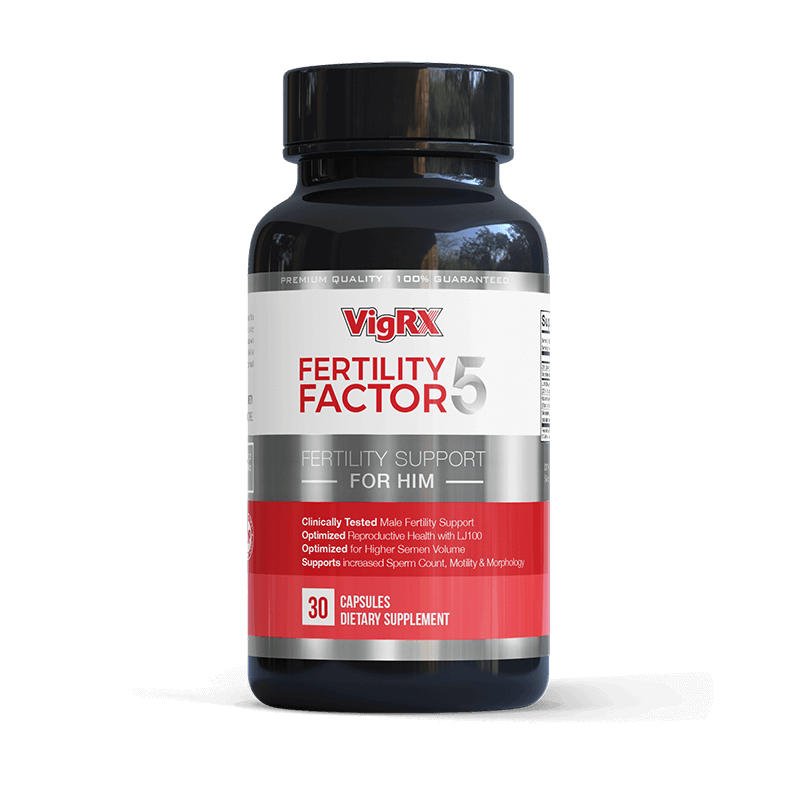
VigRX® Fertility Factor 5
For men looking for a comprehensive, evidence-informed supplement designed specifically for male fertility, VigRX® Fertility Factor 5 (FF5) is one of the more well-regarded options on the market. Developed by Leading Edge Health, FF5 is formulated with a blend of clinically researched ingredients targeted at the key pillars of male reproductive health: sperm count, motility, morphology, semen volume, and overall sperm quality.
The formula includes several standout ingredients with peer-reviewed support. LJ100, a patented extract of Eurycoma longifolia (also known as Tongkat Ali), has been shown in clinical studies to significantly improve sperm motility, concentration, and morphology, as well as to support healthy testosterone levels. The formula also includes Panax Ginseng, a well-studied adaptogen associated with improved erectile function and sperm quality; BioPerine (black pepper extract), which enhances the bioavailability of other nutrients; zinc, for testosterone and sperm development; and Selenium, a trace mineral that is essential for normal sperm formation and motility.
What distinguishes VigRX® Fertility Factor 5 from many other supplements is its clinical backing. Studies on the ingredients in FF5 showed statistically significant improvements in sperm motility, morphology, and count in men who took the supplement over a 90-day period, which aligns with the natural sperm regeneration cycle. For couples trying to conceive naturally, and for men who want to take a proactive, science-supported approach to reproductive health, FF5 represents a convenient way to address multiple fertility factors simultaneously. As with any supplement, it is best used as part of a broader lifestyle approach and in consultation with a healthcare provider, particularly for men with diagnosed fertility challenges.
Conclusion
Male fertility is not fixed — it is dynamic and responsive to the choices men make every day. From dietary improvements and targeted supplementation to stress reduction and toxin avoidance, the strategies outlined here are grounded in peer-reviewed science and can produce real, measurable improvements in sperm quality within a matter of months. Whether you are actively trying to conceive or simply investing in long-term reproductive health, the evidence strongly supports taking a proactive, holistic approach.
References
Ambiye, V. R., et al. (2013). Clinical evaluation of the spermatogenic activity of the root extract of Ashwagandha (Withania somnifera) in oligospermic males: A pilot study. Evidence-Based Complementary and Alternative Medicine, 2013.
Duty, S. M., et al. (2003). Phthalate exposure and human semen parameters. Epidemiology, 14(3), 269-277.
Fallah, A., Mohammad-Hasani, A., & Colagar, A. H. (2018). Zinc is an essential element for male fertility. Journal of Reproduction & Infertility, 19(2), 69-81.
Gaskins, A. J., et al. (2015). Physical activity and television watching in relation to semen quality in young men. British Journal of Sports Medicine, 49(4), 265-270.
Gollenberg, A. L., et al. (2010). Semen quality in fertile men in relation to psychosocial stress. Fertility and Sterility, 93(4), 1104-1111.
Gonzales, G. F., et al. (2001). Effect of Lepidium meyenii (Maca) on spermatogenesis in male rats acutely exposed to high altitude (4340 m). Journal of Endocrinology, 168(3), 457-461.
Greco, E., et al. (2005). Reduction of the incidence of sperm DNA fragmentation by oral antioxidant treatment. Journal of Andrology, 26(3), 349-353.
Gupta, N. P., & Kumar, R. (2002). Lycopene therapy in idiopathic male infertility — a preliminary report. International Urology and Nephrology, 34(3), 369-372.
Jensen, T. K., et al. (2014). Association of sleep disturbances with reduced semen quality: A cross-sectional study among 953 healthy young Danish men. American Journal of Epidemiology, 177(10), 1027-1037.
Jung, A., Schuppe, H. C., & Schill, W. B. (2001). Influence of the type of underwear on scrotal temperature and the quality of spermatogenesis. Urologe A, 40(6), 484-489.
Jurewicz, J., et al. (2015). Environmental exposure to pesticides and sperm aneuploidy. Annals of Human Genetics, 79(2), 97-105.
Meeker, J. D., et al. (2010). Urinary bisphenol A concentrations in relation to serum thyroid and reproductive hormone levels in men from an infertility clinic. Environmental Science & Technology, 44(4), 1458-1463.
Safarinejad, M. R. (2009). Efficacy of coenzyme Q10 on semen parameters, sperm function and reproductive hormones in infertile men. Journal of Urology, 182(1), 237-248.
Safarinejad, M. R. (2011). Effect of omega-3 polyunsaturated fatty acid supplementation on semen profile and enzymatic anti-oxidant capacity of seminal plasma in infertile men with idiopathic oligoasthenoteratospermia. Andrologia, 43(1), 38-47.
Sepaniak, S., Forges, T., & Monnier-Barbarino, P. (2006). Cigarette smoking and fertility in women and men. Gynecologie Obstetrique & Fertilite, 34(10), 945-949.
Vaamonde, D., et al. (2012). Physically active men show better semen parameters and hormone values than sedentary men. European Journal of Applied Physiology, 112(9), 3267-3273.
World Health Organization. (2021). WHO laboratory manual for the examination and processing of human semen (6th ed.). WHO Press.
Young, S. S., et al. (2008). The association of folate, zinc and antioxidant intake with sperm aneuploidy in healthy non-smoking men. Human Reproduction, 23(5), 1014-1022.